Showing posts with label NPLEX. Show all posts

2013-05-26

Medical Monday 1: Mind and Mood

Today we're chatting about mind and mood.

Lately, I've received lots of questions about mind and mood, and what are some things that could be done to improve it naturopathically. This obviously isn't an exhaustive list and you should of course consult your own naturopathic doctor or health care provider to discuss an individual treatment plan, but here are a five mind and mood 'boosters'. 

1) Dietary Additions, like egg yolks. According to this article, titled "Eat Your Egg Yolks", the choline found in egg yolks helps healthy brain development (so eggs are very beneficial for pregnant moms). There are many other foods that help the mind and mood. Talk to your healthcare provider, dietitian, or naturopathic intern (find one here!) for more dietary support. 


2) Mood Gym. This website features exercises to help people who experience anxiety and depression. It's free, but you have to sign-up/create an account to start using the exercises. 

How about a life-size game of chess to boost your mind?

3) Mindfulness. Interested in learning more about mindfulness? I learned about mindfulness in school, but also with the help of this book.

4) Fatty Acids. The standard north american diet is heavy in omega 6 fatty acids and low in omega 3 fatty acids. The healthy ratio of omega 6 to omega 3 should be about 2:1, but research says the ratio is now more like 15:1. Yikes! Thankfully omega 3s are found in some yummy foods, like fish, walnuts, flaxseeds, and even grass-fed beef.
Salmon has omega 3 fatty acids

5) Herbal Support. This Summer, second-year students will be writing NPLEx 1 and new graduates will be writing NPLEx 2. In preparation for this major exams, many herbal supplement companies were offering deals to students on herbal mind support. Herbs like Gingko and Bocoba were selling like crazy! There are lots of herbs to help balance mood or boost memory. Talk to your naturopathic intern to find the herb support for you. 

2012-10-15

Solve, Not Sell (+ NPLEX Results).

In my Practice Management (aka Business) class, my professor says that as doctors, we won't be trying to "sell" ourselves to future patients, instead we'll be trying to "solve" their problems. Solve, not sell. Our job is to connect with members of the community and try to solve their problems rather than sell them on why naturopathic medicine is for them. Our goal is to share and educate (hopefully future) patients on the benefits naturopathic medicine and how it can help to solve their problems, and then the (hopefully future) patient will then sell the idea to themselves and book an appointment to see you. We just need to plant the wellness seed in their head and then they must decide whether or not they want to make an appointment and start their health journey!
___________________________________________

I thought I would take the time to let my readers know that I passed my board exam, NPLEX 1 (written on August 7, 2012)!  I found out the news a couple of weeks ago, but many of my classmates didn't find out until late last week, so I wanted to wait until everyone heard before spreading the news of my own results. Thanks again for following along my journey to become a Naturopathic Doctor.  With this big exam out of the way, I am well on my way (over 50%) of achieving my dream job!

2012-09-24

Exciting Things at CCNM.

Image source here.

Exciting things are happening at CCNM these days!  Here's a quick summary of some of the latest CCNM news:

- CCNM is going to open the first teaching clinic in a hospital in North America! The clinic will open in Winter of 2013 and will feature general naturopathic medicine shifts. That means I might be able to intern there during my fourth year of studies!

- In addition to the Sports Medicine, Cancer, and Pediatrics specialty shifts offered in the school's teaching clinic, two new shifts have been added: a fibromyalgia/chronic fatigue shift and LGBT/immigrant community-focused shift.

- Concerns with the preceptorship program (I've complained about this program before on the blog) are finally being addressed. In the word's of CCNM's dean "Students feel that a large number of NDs either rejected or ignored their request to precept with them" Yep, this has happened to me many times. As a result, the school is reducing the number of hours required (we did need 100 hours, which is simply too much).

- CCNM surveyed students who wrote NPLEX on August 7, 2012. The survey results found (according to the school's dean): "...that while certain areas of the NPLEX exams had improved, the exams were still testing minutia, that NPLEX I was not considered a fair assessment of biomedical knowledge and, most importantly, that there was a disconnect between what was being taught at CCNM and what was being tested". Agreed (I complained about these things already on the blog)!  Thankfully, NABNE---NPLEX's governing body---is looking into CCNM's concerns. Let's hope that the exam will be better for the second-year students who will have to write it this upcoming Summer.

2012-08-08

NPLEX Randomness.

Awesome joke, Nora!

I wrote my NPLEX Basic Sciences exam yesterday. Phew, glad that's over.

The joke pictured above was created by my classmate and pretty much sums up how we all feel about the exam.  All that studying I did in July?  I'm not sure if it all paid off (thankfully I learned a lot this Summer, but did it help me ace NPLEX, probably not because it was such a random exam).  Was it was I expected? Not at all. Like I said, it was quite random.

NPLEX was one of the silliest exams I have ever written.  I am shocked at how ridiculous the question choices were.  When you only have 200 questions to evaluate how knowledgeable a future doctor is within the realm of basic sciences, you think you'd test them on X, Y, and Z, and leave by the wayside those minor less-relevant-to-a-doctor details.  Seriously, with only 200 questions you decide to ask about that? There were several questions evaluating my understanding of high school-level Biology (odd), lots of questions regarding the shapes of bacteria (hmm, don't know how often in my clinic I'll be observing bacteria under a microscope... I'm guessing not very often), and many concepts were repeated on the exam (you already asked four questions about the kidney, and now you want to ask me four more!). I don't know, but I feel like I would have divided up the 200 questions a bit better.  You know, feature more pathologies and test more medically-relevant concepts.

Anywho, enough complaining.  Hope I don't sound like a sore loser or anything, because that wasn't the goal of this post. In fact, I think I prepared super-well for the exam (well, as much as you can prepare for a random exam like NPLEX, ha ha). I'm very proud of my effort overall, regardless of what the NPLEX examiners say*  :)

*Note: exam results aren't published until about October, so I won't know what they'll 'say' for a long while.

2012-08-07

Funny Fruit.

I'm writing my NPLEx board exam today, so I won't be posting anything other than these two 'food for though' comics. Hope they make you giggle!

. 


But NPLEx isn't the most important thing happening today, because it's also my Dad's birthday, and we all know that birthdays beat board exams in terms of importance :)

Happy Birthday, Dad! 

2012-08-06

The.Big.Day.


Tomorrow is the big day! 

I write my NPLEx Basic Sciences Board Exam tomorrow, bright and early. Hmm, it's been over a month of studying full-time and it still feel like I don't know a thing! Ha ha. I guess cramming two years of full-time studies into a 200 multiple choice exam will do that to you.  Just so.much.material. Nevertheless, I'm actually feeling quite good.  Let's hope this good feeling is still there in the morning as I nervously make way to the exam hall...

See you when it's over!

~Becca

2012-08-05

Womanly Wonderings.

Note: the information in this particular post is completely derived from my own medical-mental processing, and therefore I could be totally wrong! I'm hoping that next year, in my Women's Health class, I'll have these questions answered. In the meantime, here are my wonderings as I try to connect the dots in my head.

While I was studying the reproductive organ chapter of my NPLEx prep book, I starting putting concepts together and started asking questions. As a result, I came up with these three womanly wonderings:


In order to metabolize and excrete estrogen hormones from the body, the liver has to conjugate the estrogens.  And in order for the liver to conjugate the estrogens, it has to have a good supply of B-vitamins to serve as co-factors in the conjugation reactions.  

Womanly wondering #1: Is this why so many NDs prescribe B-vitamins (aka B-complexes) to menstruating females suffering from PMS and bad menstrual cramps? Are the B-vitamins prescribed to support the liver and the excretion of estrogens? 

__________________________ 

Estrogen and progesterone (the female hormones) levels drop in menopause not because they can't be made anymore, but because a menopausing female doesn't have any more follicles left in her ovary and it is the follicle that stimulates the release of estrogen and progesterone.

Womanly wondering #2:  Is this why every female enters menopause at a different time, because it depends on when their follicle supply runs out? (For instance, all women don't just immediately start menopause on their 50th birthday; the start date is so variable). If so, do the women with more follicles than others, not enter menopause until later in life? 

__________________________

A magnesium deficiency can causes muscle problems, such as cramps (among other symptoms). 

Womanly wondering #3:  Is this why some menstruating females get cramps, because they are deficient in magnesium? Hmm, chocolate is a food source of magnesium, is this also why some menstruating females crave chocolate? Because their bodies want the magnesium stored in the chocolate? 

2012-08-04

Brain Boosting.

With my big exam next week, I've been boosting my brain all week! 

Here are three brain-boosting things that I am currently doing:

1) Fish.  This week I made both my sardine salad and my anchovy-containing Caesar salad dressing (my two SMASH recipes).  Hooray for omega-3 fatty acids (the fats important for brain health!).

2) Fish Oil. I try to take fish oil daily, but sometimes I forget. Not this week! I've been consistent with this supplement.  The fish oil brand I use: Ascenta.

3) Sleep.  Yep, got to make sure that you sleep enough because sleep is when short-term memories are converted into long-term ones. I've been getting around 8.5 hours a night and I wake up feeling refreshed and ready to tackle another day with books!


2012-08-01

Dear Classmates.

Notice anything new around here?  Well, with my NPLEx exam less than a week away, I decided that my blog needed some updating.  Priorities, priorities.  ;)
_________________________________

A letter to my classmates...

Dear Classmates,

We will be writing our NPLEx exam early next week and I thought you might like to hear some words of encouragement. Here goes nothin': If you fail, you are not dumb, not a slacker, not going to be a bad doctor, and not going to flunk out of naturopathic medicine.  There I said it.

I haven't even written NPLEx and I already have strong opinions about it. First of all, it is impossible to know it all; thus our brains pick and choose what it wants to remember. Hopefully it remembers all the "right stuff" for the exam questions selected, but who knows, you could be stuck with crummy questions that just don't trigger recall from your long-term memory.  Second, and speaking of exam questions, can I mention that we've been studying for (on average) over a month only to be tested on 200 measly questions?!?! Yep, that's it. All that studying (well over a month now) for only 200 silly questions... *sigh*. Third, some students have to fail. Yes, much to our dismay, the NPLEx board people must fail some students. They 'need' a percentage of failures each year.  So even if we are all keeners and get between 80-90% of the questions correct, those who only got 80% or 81% of the questions will automatically fail the exam. Not fair.

My point is: there are a lot of variables beyond your control, so if the cards aren't in your favor, then it's not all your fault.  You will be O.K. and you will still have the potential to be a fabulous naturopathic doctor one day!  NPLEx will not break us down!

Happy studying and all the best next week!

Love your classmate,

Becca

2012-07-28

Morning Carbs.

The Dawn Phenomenon explains how in the morning, the liver is better at clearing insulin from the blood stream. Since you need insulin to get glucose into your cells for fuel, having no insulin is not a good thing when there is glucose in the blood stream. Here is the dawn phenomenon pathway:

Morning breakfast full of carbohydrates --> carbohydrates are converted into glucose --> need insulin to take this glucose out of the blood stream and feed it to cells --> but insulin levels are reduced as the liver tends to recycle insulin in the morning

The dawn phenomenon is especially important for diabetics. They likely will need to adjust their insulin intake in the morning to accommodate their hyper livers, eating up all the insulin that they need to process their breakfast carbs!

As for non-diabetics, the dawn phenomenon may explain the yucky some people get in the morning if they eat too many carbohydrates (and I'm not talking about Chocolate Cocoa Puffs because they make lots of people not feel their best in the morning, but something as subtle as too many slices of toast). Similarly, the dawn phenomenon may support the idea that pairing carbohydrates with protein and fat is good in the morning because they slow down carbohydrate absorption, which also means that they slow down the need for insulin, giving the liver time to snap out of it and leave insulin alone!

2012-07-27

Pox Party.

Image source here.

What's with all the parents rushing to take their kids to Chicken Pox Parties?  

 You know, those parties in which parents bring their kids to the house of the one sick child (who is sick with Chicken Pox), in hopes that all kids in attendance get infected too. Yep, those parties really exist and they have officially been named Pox Parties.

Chicken Pox is caused by the herpes virus Varicella Zoster.  It is self-limiting (meaning it will cure itself, no drugs required, especially not Aspirin (it can cause grave health consequences if used... or so my NPLEX study manual has told me so)). However, it is not a comfortable infection: the child will be covered in a rash and will be quite itchy.  I remember my Chicken Pox experience: I was mortified at the way my skin looked and was perturbed that I had to keep taking baths (to prevent secondary infection of my bumps and to sooth the itchiness).

Getting infected with Zoster seems to be a normal part of growing up. The purpose of a Pox Party is to get children innoculated with Zoster when they are young and have stronger immune systems. The parents' reasoning makes sense to me because adult infections with this virus are quite severe!  (Note: I've read, however, that some Medical Doctors (MDs) still advise that children simply get vaccines against Zoster rather than attending a Pox Party, per say. Talk to your doctor and do your own research to find out what is best for you and your child. This post is not meant to act as medical advice!).

A complication of Zoster is shingles.  Shingles can develop in an adult with the virus, or it can even occur in someone who already had been exposed to the virus as a child (not fair, huh? :P).  That being said, reactivation of the Zoster virus usually happens in immunocompromised (weak immune system) or already very sick and weak individuals and not usually in regular 'ol healthy Joes.  Shingles is an extremely painful condition as the virus lies in the nerve roots (deromatome) lining the chest wall, and its presence here aggravates the nerves, causing painful, hot, and burning sensations.

2012-07-25

The Female Cycle.

As promised, today I'm going to explain the painting I showed yesterday on the blog.  Your guesses were correct: the painting was of the menstrual cycle, but in much more depth.

Painting inspiration here.

A tad overwhelming upon first glance?  Yeah, I got kind of carried away with the doodling... 

Here's another breakdown: 

Yellow: the ovarian cycle, featuring the maturation of the follicle, ovulation at day 14, and formation of the corpus luteum.

Orange: the basal body temperature changes in a menstruating female.  When the body ovulates, the temperature rises about 0.5 to 1 degree Celsius higher and remains elevated for the remainder of the cycle, eventually dropping back to the regular body temperature at the end of the 28 days. Note: the basal body temperature is best measured in the morning, immediately upon waking (don't even get out of bed!), using an oral thermometer.  Measure subsequent temperatures at the same time each morning. 

Green: the anterior pituitary hormones' cycle. FSH = follicle stimulating hormone, and LH = luteinizing hormone.

Blue: the ovarian hormones' cycle. Estrogen and progesterone. 

Red: the uterine cycle. The shedding, then the thickening of the uterus lining.

Black: menstrual bleeding days. Note: the full menstrual cycle begins (i.e. day 0) on the first day of bleeding. Bleeding is not the end, but the beginning of everything you see in the painting above!

Brown: non-bleeding days.  

Note: notice how everything changes on day 14? I call this the 'magic day' because ovulation changes everything cycle-wise.

2012-07-24

Paintings are More Memorable.

I got crafty over the weekend. 

Can you guess how this painting will help me with my NPLEx studies? 


If only I could paint a pretty version of every complex image I need to memorize for the exam. I totally would if time and resources were plentiful :P.  Now whenever I need to think of ______, my painting of this concept will pop into my head!  I'm sure that I will be able to remember this piece during my exam much more easily than one from a textbook. As a result of me jazzing-it up and giving it personality, this concept is now more meaningful to me, which also makes it more memorable to me.

Note: a full explanation of the painting will be posted tomorrow on the blog.

2012-07-23

The Appendix.

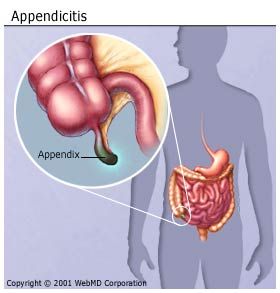
The appendix is a sac-like structure lying along our digestive tract (specifically located at the junction between the small and large intestines). Although it's function is debatable and largely unknown, it presumed to have once had a role in our immune system because it is full of lymphoid tissue (which is found in all other immune system-related organs/structures in the body). It is thought that the appendix used to contain bacteria to help humans digest plant matter (remember: we can't eat grass because of their cellulose (beta 1-4 linkages) content). Perhaps the appendix was a more frequently used organ when we were primates, feasting on leaves and such.

Image source here.

Often people have their appendix removed (called an appendectomy) when they are diagnosed with acute appendicitis. This is when the appendix is inflamed and the patient experiences a great deal of abdominal pain.  The pain starts vaguely/diffusely around the belly button, and then moves to a particular point between the belly button and the right hip bone (this halfway point is called McBurney's Point). One of the key questions to ask a patient with hypothesized appendicitis is whether or not the pain moved. Appendicitis is considered a medical emergency because without treatment it can lead to shock if the appendix were to rupture.

2012-07-17

Three Weeks!


The essentials: CCNM mug (with herbal tea), bright highlighters, and NPLEX study manual.

Three weeks until D-Day (aka the day I write my NPLEX exam)! 

Here's what I've been staring at lately (clockwise from the top left): arteries of the body, female hormone/menstrual cycle, back muscle (erector spinae in particular), and heart defects (tetralogy of fallot in particular).  

Ugh...anyone want to trade places? Ha ha. 


Image source here.
Image source here.


Image source here.
Image source here.

2012-07-14

Saturday Studying.

My Saturday Studying has taught me that...

- Humans possess between 600-700 lymph nodes.
- Fat is moved around our body via the lacteals of our lymphatic system
- Progesterone is a female hormone that causes the basal body temperature of the body to rise during ovulation.  This is extremely helpful for females trying to conceive. They are able to track their basal body temperature (i.e. take the temperature each morning while they are still in bed using an oral thermometer. When they see a rise in temperature, they know they've ovulated).
- Our thyroid gland sits in our neck, but is actually derived from our tongue.
- Alcohol inhibits our anti-diuretic hormone (ADH).  Anti-diuretic = anti-urine = less pee. But when ADH is prevented from doing its job, we pee more.  Hence the needs to run to bathroom more frequently while drinking.
- Tyrosine is an amino acid required to melanin, our skin's pigment.  Albinos (think white hair, very pale skin) have a problem with their tyrosine metabolism.  No tyrosine = no melanin = no skin or hair pigment. 

What did you learn today?

2012-07-08

Cancer in 5, 4, 3, 2, 1...

Five tid-bits about cancer taken from my NPLEX studying:

1) Cancer cells have to replicate thirty-times before they become clinically detectable.

2) People often die from cancer not from the tumor itself, but because of the tumors secrete chemicals that cause cachexia (aka wasting).  Cachexia causes a patient to continuously lose weight and basically starve to death.  Even with eating and lots of food, cachexia can't be reversed.

3) Normal cells are programmed to die when they get old or unhealthy.  This self-suicide mechanism is called apoptosis. Cancer cells cause the apoptosis mechanism to fail, meaning that sick, cancerous cells can keep on living, even though they should have died/undergone apoptosis. Basically, cancer cells highjack the mechanisms that normally keep our cells in check!

4) Chemotherapy and radiation don't always work against cancer because these treatment options work to prevent growing cells from growing any further. Unfortunately, the majority of cancers do not actively grow (up to 90% of cells in some tumors don't divide). The cancers that respond best to chemo and radiation are those rapidly dividing cancers (e.g. leukemia (cancer of white blood cells)).

5) When a cancer spreads, it metastasizes. This means that cancer has entered either the blood or the lymphatic system, and now that it has entered a rapidly moving transport system, the cancerous cells are able to reach almost any part of the body.  If a cancerous cell were to get lodged in a capillary in the lung, for instance, it can take this opportunity to 'set-up camp' and make a new home here. The cancer has gone from the breast tissue, for example, and has now spread to the lung.

2012-07-05

The Skin We're In.

We're talking all about SKIN thanks to my NPLEX studying this week; here are some tidbits that I have learned:

- Caucasians are mostly 'white' in appearance due to their melanin-poor skin.  Without a lot of melanin covering the skin and giving it pigment/color, the white-colored collagen---lying under the surface of the skin---tends to shine through, giving the skin a pale or 'white' color.

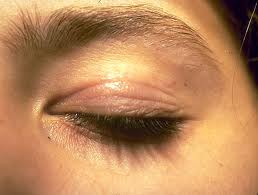
- The skin is thickest on our feet, palms of our hands, and on our lower back. The thinnest skin we have is on our eyelids.
Image source here.

- Some parts of our skin are extremely sensitive to temperature, pain, light touch, etc. (e.g. the skin on our face). This heighten sensitivity is due to the presence of free nerve endings lying near the surface of the skin.

- Each hair on our skin has a muscle near its shaft (the arrector pili muscle).  This muscle contracts and makes our hair stand on its end when we are cold (producing what we commonly refer to as 'goosebumps').

Image source here.

 - The purpose of the raised hair shafts (goosebumps) is to create tiny grooves or pockets on the skin in order to trap warm air, helping our skin warm-up.


P.S. Check out this info-graphic on the benefits of spending time outdoors (produced by the creators of the 30x30 Nature Challenge!). Cool stuff.

2012-06-29

Would you like some fat and protein with that?

No, I would not like some fries with that.  Instead, I'll take some (healthy) fat and protein with that, please and thank-you. 

When a meal contains fat and protein, the beginning of the small intestine (the duodenum) detects the presence of the fat and protein and sends signals to the stomach to slow it's emptying.  Basically, the small intestine says, "hey stomach! Hold on to that food. There is a lot of fat and protein in this meal and they take longer to digestion; I need more time".  When the stomach retains its food instead of quickly passing off to the small intestine, we feel fuller longer. Fat and protein are more complicated to digest and absorb then carbohydrates or water-rich foods, so are stomach and intestines are too busy dealing with them than to whine for more food.

Therefore, one of the keys to keeping hunger at bay and to feel more satisfied after a meal (preventing excess snacking): make meals contain some fat and protein.  

Note on today's picture: I've being trying to find a way to post the picture above on the blog.  I thought today, with my "fries with that" joke was as good a time as ever. Source unknown.

2012-06-27

Tennis/Tetanus Talk.


Tetanus is an infection caused by Clostridium tetani. The name tetani/tetanus comes from the shape of this bacteria.  It is rod shaped, but with a round spore at one end. This shape looks like a tennis racket, hence the name tetani. C. tetani lives prodominately in the soil. Humans contract the bacteria from the soil when something that is soil covered penetrates the body (such as a nail that was once outside).  Contrary to common belief, the rustiness of the nail is not what we should be afraid of, but the soil covering the end of the nail!

When C. tetani enters the body, it starts making a toxin. This toxin enters the nerves of the central nervous system and prevents the nerves from being turned off (it blocks the release of inhibitory neurotransmitters, for those super nerds who are curious :P). When the nerves can't "turn off" the continue to fire and those in muscles can become paralyzed in an active form (i.e. the contracted form of the muscle).  

One of the first muscles to be affected by the tetanus toxin is the masseter muscle in the face.  This muscle allows us to chew our food and clench our job.  As such, if the masseter becomes stuck in it's contracted form, a person will suffer from "lock-jaw".