Showing posts with label Botanical Medicine. Show all posts

2013-05-28

Treatment Tuesday 1: I'm in clinic!

I've been in clinic for almost two weeks now and boy-oh-boy has it been exciting! So far, so good. I'm am loving my supervisors, shifts, schedule, office, and all that jazz.

I am shocked at how easy the transition from student to intern would be. Upper years told me that you'd be "very uncomfortable" for AT LEAST a month. But surprisingly, I haven't been nervous! I've actually felt very comfortable in my new role. I guess that means that I'm in the right profession :)

So what have I done so far... had a shift in the Botanical Compounding Room (see below), had a full day of orientation/training for the Adjunctive Cancer Care shift, started at a satellite clinic, performed acupuncture, and even given some vitamin B12 injections. It's been a very busy, but very exciting couple of weeks.

Look at all those tinctures (back wall)! To the right are loose leaf herbs that can be used for teas!

2013-05-26

Medical Monday 1: Mind and Mood

Today we're chatting about mind and mood.

Lately, I've received lots of questions about mind and mood, and what are some things that could be done to improve it naturopathically. This obviously isn't an exhaustive list and you should of course consult your own naturopathic doctor or health care provider to discuss an individual treatment plan, but here are a five mind and mood 'boosters'. 

1) Dietary Additions, like egg yolks. According to this article, titled "Eat Your Egg Yolks", the choline found in egg yolks helps healthy brain development (so eggs are very beneficial for pregnant moms). There are many other foods that help the mind and mood. Talk to your healthcare provider, dietitian, or naturopathic intern (find one here!) for more dietary support. 


2) Mood Gym. This website features exercises to help people who experience anxiety and depression. It's free, but you have to sign-up/create an account to start using the exercises. 

How about a life-size game of chess to boost your mind?

3) Mindfulness. Interested in learning more about mindfulness? I learned about mindfulness in school, but also with the help of this book.

4) Fatty Acids. The standard north american diet is heavy in omega 6 fatty acids and low in omega 3 fatty acids. The healthy ratio of omega 6 to omega 3 should be about 2:1, but research says the ratio is now more like 15:1. Yikes! Thankfully omega 3s are found in some yummy foods, like fish, walnuts, flaxseeds, and even grass-fed beef.
Salmon has omega 3 fatty acids

5) Herbal Support. This Summer, second-year students will be writing NPLEx 1 and new graduates will be writing NPLEx 2. In preparation for this major exams, many herbal supplement companies were offering deals to students on herbal mind support. Herbs like Gingko and Bocoba were selling like crazy! There are lots of herbs to help balance mood or boost memory. Talk to your naturopathic intern to find the herb support for you. 

2013-04-28

Lullaby Lavender

What's your favorite flower? Tulips are mine favorite appearance-wise, though in terms of health and therapeutic benefit, lavender is my healing flower of choice. 
Tulips surrounded by blue flowers that look a lot like lavender

Lavender (Lavandula stoechas) is a versatile plant: you can eat it, smell it, and apply it topically. It is antiinflammatory (can be applied topically to acne when diluted with rosewater), a nervine (soothes the nerves; great to sniff when stressed), is anxiolytic (meaning it helps decrease anxiety), and assists with sleep (sleep with some dried lavender under your pillow (keep the buds contained in a sachet; I bought my sachet of dried lavender in the South of France, a place where lavender grows like weeds!) or spray some lavender essential oil (that has been mixed with water) into the bedroom before hitting the sack). 

Lavender infused foods (here is a raw lavender tart recipe) and drinks, like lemonade and tea are quite tasty too. When cooking with lavender, just make sure you buy food grade buds. I've got some lavender to use up, so you can expect a lavender baked good recipe on the blog soon.  

2013-03-04

...and we're back!

...back to school, that is. 

After 2+ weeks of reading week and midterms, today was the first day back to school. It was busy being back to the grind, but I missed the hustle of bustle of daily school (however, some aspects were extremely stressful, so I hated those parts of today... more on that in another post). Also, now that it is March, things are busy again so I can't guarantee daily posts. I'll pop in as much as I can, but if I don't post, it's because life and school are really hectic!
___________________________________ 

Check out this awesome Canadian health news! I've talked about dandelion root in the past as a good liver detoxifier and replacement for coffee, but who knew that it fights cancer? I'm actually having a cup of dandelion tea right now as I type! Here's my favorite brand, but you can also buy this one, or this one. Or, as explained in the news article, you can make your own by grinding dandelion roots!


Image taken from the Traditional Medicinals website. 

2013-02-19

The Naturopathic First Aid Kit/Pantry

I've been tallying up (in my head) all of the naturopathic medicines we keep naturally in our household. Products that you probably already have in your cupboard, but maybe didn't know that they could be used medicinally. While seeing a naturopathic doctor isn't cheap (unless you have private health insurance), a lot of the things that an ND will recommend are very inexpensive and are even free if you already keep a well-stocked pantry. It's what I love most about naturopathic medicine: finding natural ways to take care of ourselves. It reminds us that food (and other household goods) is medicine!

Below is my running list* of things that should be kept on hand as part of the Naturopathic First Aid Kit (also known as the Naturopathic Pantry). Most of these items are likely already kept in your the kitchen!

*This list a work in progress. I will continue to update this list as items come to mind. Feel free to add items to the comments of this post if you think of others.


Naturopathic First Aid Kit/Pantry

Coconut oil - great for skin as a moisturizer, use to make deodorant
Oats - for itchy skin add to baths, eat to relieve constipation, use in homemade face masks
Rice - use to make for congee (especially when experiencing gut troubles), part of the BRAT diet
Socks (thick, wool socks and a pair of thin, regular socks) - perform "wet socks" when getting sick
Ginger chews - for nausea, helps digestion after a big meal, carry on plane trips for motion sickness, warming after eating something cold/cooling. I like this brand.
Unsweetened cranberry juice - for urinary tract infections (UTIs)
Peppermint tea - to combat colds, helps digestion (don't forget to cover it)
Chamomile tea - to sooth tummy aches, helps babies teeth
Black tea - stops bleeding
Epsom salts - add to baths to relax muscles, great for injuries
Raw honey - dab onto acne (antimicrobial), make homemade cough syrup, mix with hot water and lemon when sick, soothes sore throats
Sea salt - gargle when sick, use as a natural exfoiliant when mixed with coconut oil (rub the mixture onto the body in the shower then wash off)
Apple sauce - part of the BRAT diet, replacement for eggs
Flax seeds - helps regulate hormones (part of the seed protocol too) good during PMS and menopause, replacement for eggs, 10 ways to eat more flax here.
Cayenne pepper - sprinkle on cold toes, a natural decongestant when eaten or inhaled
Olive oil - use to dilute essential oils, heart protective
Oranges/tangerines - dry the peels, then steep in tea to help digestion (dampness in TCM), eat when getting sick for the vitamin C and flavinoids
Onions - apply to ear during an ear ache, make homemade cough syrup, eat lots when sick in soups
Garlic - eat when sick in soups, lowers blood pressure, is anti-microbial
Lemon - in water it has many uses: acts as digestion stimulant, it helps the liver detox, flavors water, and drink hot when sick with honey
Kettle, bowl, and a towel - use for steam inhalation (place boiling water from the kettle into the bowl, place your face above the bowl, and wrap your head with the towel, trapping yourself into a little tent full of steam), add essential oils to this (~5-10 drops) if you have them

More: check out my post on culinary spices as medicine and one on herbal teas

2013-02-04

Tea Tricks


Tea: not just for drinking!

Three tea tricks:

1) Soothe a teething baby by dipping a wash/face cloth in cooled chamomile tea. Ring out, and let the baby suck on the cloth. Alternatively, dip in tea, ring out, place in freezer for a bit to chill, then give to baby. Chamomile is a very soothing herb. 

2) Got bleeding gums, bit your tongue, or suddenly lost a tooth? Stop oral bleeds by sucking on a black tea bag. The tannins in black tea are astringent and stop bleeding. 

3) Use green tea as a facial toner. Check out the recipe here! Green tea is also astringent, causes pores to close and the face to look more even toned.  

2012-12-13

Avena Aveeno

I start (almost) everyday with Avena sativum.

Well, Botanical Medicine is officially over, but sadly it didn't end on a happy note. The exam was rough and tough. Oh well, moving on to other modalities/subjects...

But let's be clear: just because my Botanical Medicine learning is over, it doesn't mean that you won't see any more blog posts dedicated to plants/herbs. I love them too much to ignore them for the remainder of my time at CCNM!

Today I'm going to talk about a plant that you probably already eat in the form of cookies, loafs, and morning porridge: let's talk about Avena sativa, or as it is more commonly known as, the oat! 

Avena has many medicinal properties. It can be used to combat depression, anxiety, stress, nervousness, and headaches induced to stress as it is a sedative and nervine tonic. Also, it helps both diarrhea and constipation (due to its soluble fiber content) and removes bad cholesterol (lowering blood lipid levels).

Topically, Avena is especially beneficial for itchy skin, such as eczema. Have you heard of oatmeal baths? They are a combination of two naturopathic modalities: hydrotherapy and botanical medicine! I've never tried one, but apparently you just add a half of a cup of oatmeal to a bath and hop-in whenever your skin is feeling particularly itchy. Be careful getting in/out of these baths, however; the oats' gooey fiber will make the water and bathtub feel extra slippery!

Did you know that the cosmetic company Aveeno is named after Avena the oat? The company is named after oats because they claim to put real oats in their products. However, I doubt that there are enough oats in these products to achieve a proper therapeutic dose...

2012-12-12

Spicy, but Safe

That pink thing is supposed to be a stomach, lol

Capsicum, aka cayenne pepper, a very spicy herb that I have talked about before on the blog, is quite the tricky little devil. You see, although this herb is spicy, it won't burn* the stomach or intestinal tract lining. Despite its so-spicy-it-burns nature, cayenne is actually protective to the stomach and digestive tract lining. It's spicy chemical constituents stimulate the stomach lining to make more mucus. The walls of the stomach are lined with cells that secrete a mucus to protect the stomach lining from the acidic stomach acid. Cayenne actually ramps up the mucus production, so that the stomach becomes more protected against not only cayenne, but other acids/spices/toxins that end up in the stomach. *However, those with stomach ulcers should avoid cayenne pepper because it will burn open wounds/exposed tissues.

...and with that, it is time to go write my last Botanical Medicine exam EVER! 

Happy 12/12/12!

2012-12-03

Hot (Black) & Cold (Green)


Did you know that even though you can (and often do) drink Green Tea hot, and even though you can have Black Tea cold (think iced tea), the way in which these teas are served does not affect their temperature?

Black Tea is innately warming. The leaves that make up black tea will warm up the body when drunk and it doesn't matter how the black tea is served. On the other hand, Green Tea leaves are naturally cooling. They cool the body, regardless of their preparation.

2012-12-01

Beyond Botanicals

My third-year Botanical Medicine prof is a genius.  No lie.  He is super knowledgeable about all things naturopathic medicine (which I guess is no surprise because he's been practicing for twenty years as an ND, I do believe), especially herbs.  Often the judicial system calls upon him as an expert witness whenever there is a legal issue involving herbs/botany.

Anywho, I mention this smart professor because his Bot Med lectures are usually filled with so much interesting material; cool stuff that goes above and beyond the course curriculum. Here are five neat things (not necessarily related to botanicals) that we discussed in his classes over the last couple of weeks:

1) Top three causes of infantile colic in breastfeeding moms: coffee, garlic, or onions in the mom's diet. 

2) Long term consequence of Epilepsy medications: osteoporosis.

3) 90% of our melatonin receptors are in our gut. Therefore supplemental melatonin (which people normally take to help them sleep better) maybe be beneficial for those suffering from gut issues (such as irritable bowel syndrome (IBS)). 

4) Beer has estrogenic effects, so perhaps it is not the best beverage for men...

5) Three side effects of potassium depletion: Alzheimer's disease, leg cramps, and heart arrhythmias.

2012-11-26

Cayenne Pepper Feet.

Image source here

We learned about Cayenne pepper (Capsicum) in Botanical Medicine recently. People often associate this herb with spicy food; it is a component in chili powder and has quite the kick! However, this herb also has lots of medicinal properties too.  My professor made a funny comment when he talked about this herb in class: he said that skiers and other people who spend long periods of outdoors in the cold, should sprinkle some cayenne pepper onto their toes before they go into the cold!  Apparently the constituents in Cayenne stimulate not only the heat receptors in the mouth, but those externally too!  I'm not a skier but I think I will try this sometime in the Winter; one day when I have to be outside during long periods of time.  I bet it will feel silly to sprinkle a spice on my feet, but it is worth a try.

Note: I have not tried this and am not recommending it per say, just sharing the idea. I am not responsible for burnt toes! :P

2012-11-16

Homemade Cough Syrup

I learned how to make homemade cough syrup in my Botanical Medicine class. 

What you'll need:
Raw honey
An onion
A wide jar

What to do:
Take a whole onion, peel of the outer skin. Slice the onion down the middle in even intervals, but don't let the onion completely "fall apart"; try to keep it all stacked together into its original round shape despite being sliced. Now, place the whole (but sliced) onion into a jar or round dish. Ideally one that is just big enough to hold the onion. Then, cover the entire honey with raw, unpasteurized honey. Separate the onion slices a bit, just enough so that honey can seep into the onion slices too.  I've tried to draw this out (see below). Seal the jar then leave it on the counter overnight (6-12 hours). In the morning, remove the onion pieces, leaving only the honey behind. This honey is now infused with the medicinal compounds from the onion! There you have it: homemade cough syrup. Take a teaspoon every hour or so (less for children) for coughs. This syrup will last for two full days. You can always make a mini version using a small onion if you don't want to waste honey for a milder cough and since the syrup only lasts two days. 

Why honey and onions?
These two foods both contain anti-microbial compounds, meaning that they fight bacteria and viruses. Honey is also very soothing.

The golden yellow color is supposed to be honey, the light brown round structure is the onion, and the black lines are where the knife would slice. See how the honey seeps into the onion? :P 

Note: this is not meant to be taken as medical advice. Talk to your healthcare provider about your own cough treatment. I'm only sharing this cough syrup recipe because it think it is so cool and demonstrates how food really can be medicine! 

2012-11-09

Magic Mustard.

Did you know that the popular condiment mustard is actually an herbal formula? The mustard seed is beneficial health wise because it contains chemical compounds that warm the skin (by drawing blood to the area) and help expectorate (i.e. spit up or clear out) mucus from the respiratory system. Mustard can be used to treat chest complaints, such as congestion and coughs, and skin conditions, such as infections.

To get the healing benefits of mustard, you first have to create a mustard poultice:

You will need a piece of cotton, thick paper towel, or old piece of fabric. Mix about 1 teaspoon of   mustard powder with 1 tablespoon of flour, then add enough water to the mixture (just enough to make a paste out of the flour and mustard powder). Spread the paste on half of the cloth and fold the cloth over. Alternatively, spread good quality mustard onto the cloth.

For respiratory effects, place the mustard soaked cloth onto the chest (note: the mustard itself is never supposed to touch the skin; there needs to be a layer of cloth between mustard and the skin). Leave this pack on the skin for 15-30 minutes. Remove immediately if it starts to burn the skin (mustard can be spicy!). 

For skin effects, place the mustard soaked cloth onto the burn/cut/infected skin. Leave on the skin for 15-30 minutes. Remove immediately if the skin gets too red, sore, or feels like it is 'burning'.

2012-11-06

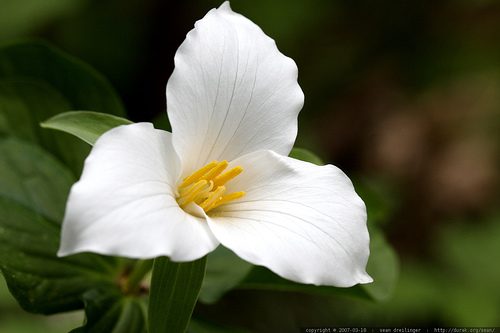
Trillium.

Image source here

Trillium pendulatum is the official flower of Ontario.  
You can see a cartoon version of the flower featured on the Ontario government symbol.


In Botanical Medicine this week, we learned that this plant (specifically the root and bulb parts) are very high in astringent tannins (I briefly explain tannins here). As a result of these binding tannins, it is often used to treat bleeding; the plant is a hemostatic herb. The root and bulb can be ground into a pulp/paste and applied topically to cuts and wounds that are bleeding.  Internally, Trillium can be taken as a tincture (more written about tinctures here) as a treatment for bleeding uterine fibroids.

Hmm, I wonder if the government of Ontario knows that they are inadvertently advertising an anti-bleeding plant... 

2012-10-28

Supplementing, Part 3.

Part 3 of 3 of my mini-series on supplementing. It's long, but an important read if you are taking supplements! 

The supplement market is huge. A billion dollar industry. For someone new venturing into the market, it can be scary and a potentially expensive venture.

Where do you even begin to shop for a good supplement? What ones do you need? Where should I buy them ...health food store? ...pharmacy? ...doctor? ...online? What's a good price? A good brand? What about dosage?

As you can imagine from the questions posed above, there is quite a lot to think about in regards to choosing a good supplement. While I can't talk about every nitty gritty detail of supplementing on the blog, I am going to try to highlight some of the most important details today.

First of all, I must advise that you see a naturopathic doctor! Naturopathic doctors are nutritional supplement experts. No one else in the field has as much supplement training as we do (much more than health food store workers, nutritionists, or MDs).  We can also perform the relevant physical exams, ask the important intake questions, and requisition the lab tests required to determine your individual supplement needs.  Naturopathic doctors can also help you sort out all of the following things to consider when choosing a supplement:

Brand and Price: some supplement brands are much better than others. In fact, the supplements at the strongest therapeutic doses can't be purchased at a health food or drug store; they can only be purchased from naturopathic doctors. Unfortunately most of the no-name supplement brands (such as Life brand form Shopper's Drug Mart and Kirkland brand from Costco) are not very cheap cost-wise, but are not very good quality wise.  For the most part with supplements, you pay for what you get. The cheaper the supplement, the more likely that the quality of the product is poor, the dosage is wrong, and the availability is not very high.

Coating: some supplements are placed in capsules that don't pass easily or have coatings that are far to thick to be digested. Have you heard of multivitamins being nothing more than "expensive pee"? This is because some supplements don't break down in the body due to a thick coating, meaning the nutrients they contain are not absorbed, and thus all of the supplement passes straight through the body and ending up in the toilet bowl. This is especially scary when you are taking a supplement for a real health concern that needs supplementation to be corrected: here you are taking a supplement under the impression that you are absorbing it, but low and behold it's just ending up down the drain. Don't waste your money on expensive pee!

Form: What is the best way in which to take your particular supplement? Capsule, tablet, tea, powder, liquid, injection, etc? Did you know that the best way to take calcium is in liquid form, vitamin B12 is via intramuscular injection, herbs are in alcohol-based tinctures, probiotics should be refrigerated, and that protein powder is best absorbed when eaten cold?

Dose and Timing: some supplements need to be taken with food, while others should be away from food. What about frequency: once, twice, or three times a day? Take as needed or daily? What about dose: are you trying to restore levels or maintain health?

Toxicity: some supplements interact with prescription medications, some raise your blood pressure, and there are others that should not be taken long term (greater than 6 weeks). What is safe for you and your body?

...and with that, I'll say it again: please consider seeing a naturopathic doctor for all your supplement needs. Even if you just make one appointment to discuss supplements, you'll be saving yourself money by not wasting money on expensive pee. When taking supplements, you want to get a therapeutic effect. Ensure that supplements are working for you by taking them at the correct dose, at the right time of day, in the best form, and in a safely manner.

2012-10-19

Cold Weather Protocol.

Here are some tid-bits to maximize your health as we enter the colder months of the year:

Vitamin C - now is the time to boost the immune system. Consider eating more vitamin C rich foods or tablets/capsules. Learn more about this vitamin here. When buying vitamin C, beware of ones containing artifical sweeteners or dyes, such as aspartame or sucralose. One cool product on the market is Emergen-C electrolyte powder packages. They are basically powdered vitamins and electrolytes that you can mix with water to create a sports-drink type of beverage.  The packets are portable so you can instantly turn any water into a vitamin-rich cocktail. Talk to your doctor about the best vitamin D dose for you.

Vitamin D - behold the sunshine vitamin! Learn more about it here. Take this vitamin from October until April to beat Winter blues, decrease your risk of cancer, and to optimize the immune system.  Talk to your doctor about the best vitamin D dose for you.

Scarves - I've already talked about their importance here (Physical Medicine theory) and here (Traditional Chinese Medicine theory).  Don't forget to wash them periodically during the  colder months to remove any pathogens that may have taken up camp.

Warming foods - goodbye salads, hello soups and stews! The warmer the food, the easier it is to digest and the more nourishing it is to the body this time of year. When our body spends time digesting, it has less time to spend repairing.

Hot tea - drink it up! We may not crave cold glasses of water or other beverages now that it is no longer hot, but keeping the body hydrated is super important all year wrong. Switch ice cubes for herbal tea bags. Bonus: herbal teas have many medicinal properties too!

2012-10-14

Plants that Clean

Breath in some fresh air in the comfort of your own home. 

In the student newspaper this month (The Vine), there was an article written by a fellow classmate (AH) about using plants to clean home air.  She discussed plants that when kept in the house, clean the air of chemicals and carcinogens, such as formaldehyde, carbon monoxide, and xylene. The three plants she mentioned were English Ivy, Spider Plants, and Devil's Ivy. So, next time you are plant shopping, pick up one of these varieties for cleaner home air!

2012-10-13

Prescription Sushi

Blob of wasabi, paired with pickled ginger: typical sushi adornments. Image source here

It is unfortunately cold, flu, and asthma season (...and still allergy season for some).  If you are finding yourself at all congested, you might want to get yourself some sushi!  Sushi for congestion? Yes! But not because of the rice, nori, or soy sauce, but because of the wasabi. Wasabi is that little green blob of goo that comes with sushi; it typically is nestled beside the pink pickled ginger. Wasabi is good to eat when sick because it is an excellent decongestant, meaning it helps open up nasal passages and decreases mucous production. Wasabi is a member of the cabbage family (Brassica). You may also know its spicy cousin, horseradish.

The wasabi root is often ground into a paste and it is this paste that is paired with sushi. However, the wasabi plant is actually hard to grow and very expensive, so most "wasabi paste" sold in grocery stores and served at sushi restaurants is actually horseradish root in disguise.  That's not OK for sushi connoisseurs who want the real stuff, but it is OK for those looking for some congestion relief because as I said above, horseradish and wasabi are cousins and have the same decongesting effects!

...and if sushi isn't your thing, then how about some beef with horseradish sauce instead? It has similar decongesting properties.

2012-10-12

Pumpkin for Prostrate

Green Gems 
Did you know that pumpkin seeds were particularly good for prostate health?  That's right: a handful of pumpkin seeds a day is especially good for overall prostate health, prostatitis (i.e. infection of the prostate gland), and BPH (benign prostate hypertropy, I very, very common condition in which the prostate enlarges and obstructs urine flow). 

It's not just male who benefit either, pumpkin seeds are phytoestrogenic, meaning they help regulate estrogen levels, increasing them or decreasing them depending on the female's individual hormonal needs.

Both males and females will benefit from the zinc content of pumpkin seeds too. Pumpkins seeds are very high in this mineral needed by the immune system.  

Three ways to eat pumpkin seeds: ground as butter (major grocery stores sell pumpkin seed butter), sprinkled on salads (they add nice crunch), or snacked upon (you can buy roasted and seasoned pumpkin seeds at grocery stores or bulk food stores, they are a better alternative to potato chips for those craving a salty treat). 

2012-10-01

Monday Highlights.

Image source here.

Today was a brain-bursting kind of day.  Lots of cool info all packed into one (typically) boring Monday! Some highlights:

- How to determine if a seed is still fresh (e.g. cumin seeds, mustard seeds, anise seeds, parsley seeds, etc): chew on one! If it tastes woody and not flavorful, then the seed is old and the medicinal volatile oils have evaporated or degraded.
- Classmate says to professor: "How do you reduce male pattern baldness?" Professor's response: "If I knew the answer to that question, I'd been lounging on an island right now".
- People with kidney stones are often dehydrated and deficient in vitamin B6 and magnesium. Supplement these nutrients or eat foods rich in them.
- Apitherapy (apis = bee) is a technique used by some (not NDs! We just learned about it for fun) to treat rheumatism arthritis. It involves stinging a patient's rheumatic/flared-up joint with a live honey bee!  Apparently the bee sting is enough for the immune system to stop attacking the body's own joint and focus on the bee sting instead.  Repeated stinging yields best results.
- Another reason to supplement vitamin D this Winter: new research reveals that vitamin D is precursor in the tumor fighting pathway of the body.
- When blood sugar levels reach 9-10 mmol/L, the sugar (glucose) spills into the urine, giving urine a sweet smell and taste... yes, taste. Before the invention of urinalysis, doctors used to taste their patient's urine to assess for sweetness and thus diabetes.
- Lastly, I got to play doctor and interview a patient today during Primary Care. In addition to asking a million questions, I also had to chart my findings (aka complete a medical record) and perform relevant physical exams on the patient. It was a great experience and I was proud of my performance (not sure what the prof thought, doesn't matter though, I'll see my evaluation in two weeks).  Anywho, the point of this story: I think I've picked the right profession when I find taking a case to be "fun" :)