Showing posts with label Vitamin. Show all posts

2013-04-15

Insect Defend: A Cool New (Nutraceutical) Product!

On the weekend, I attended the Green Living Show here in Toronto. I had an awesome time checking out the vendors, talking to reps, eating the locally prepared grub (mmm vanilla drinking chocolate by ChocoSol), making a few 'green' purchases (a product from Pure Thanks and some amazing blueberry juice), and test driving an electric car, the Nissan Leaf! Fun times for sure.

One company with whom I talked at the expo was Insect Defend. They make this natural and safe alternative to toxic bug sprays: instead of using harmful chemicals to deter bugs, they use vitamins!

Their product is a small, clear patch that adheres to the skin and releases vitamin B1 into the body. You simply stick the patch on your body two hours before you plan on going outside and/or around mosquitos.

How does it work? Well, apparently mosquitos and other pesky bugs hate the scent of vitamin B1! When the vitamin is absorbed into your skin via the patch, the B1 that is now in your skin keeps those bugs away. That's it, that's all: no more bug sprays or nets, just vitamins!

Vitamin B1 to the rescue!
Taking vitamin B1 through the skin is more effective than taking it orally. When you take it orally, the vitamin has to go through the whole digestive tract and is subjected to the first-pass effect of the liver. But if it is absorbed through the skin, it avoids all the degradation that occurs during digestions.

Apparently many people have used and testified to the effectiveness of Insect Defend. Several major clinical trials are also being conducted to test its efficacy. I myself purchased a pack to give them a try; I want to see vitamin B1 in action for myself!

Thanks to a major deal on Dragons' Den, Insect Defend Patches are now available at most major stores, like Loblaws, Superstore, Metro, Walmart, Canadian Tire, and many more. ...if you give them a try, let me know your experience. As a naturopathic medical student who studies vitamins at great length, I am super curious about this new-to-me way of using vitamin B1!

2013-03-30

Vitamin B12 Injections and More

On Monday, I performed my first vitamin B12 injection. 


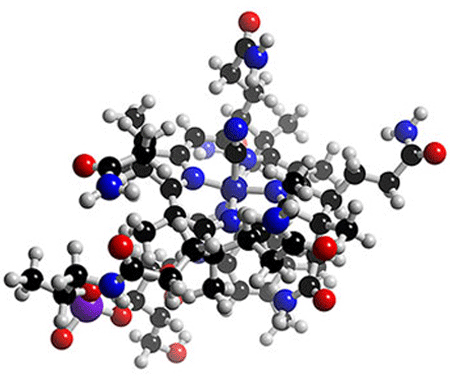
Vitamin B12 (also known as cobalamin), is a B-vitamin in the body. It is water-soluble, so when the body has enough of this vitamin, it will simply pee out any excess. Overdose or toxicity from vitamin B12 is extremely rare due to its water-solubility. Vitamin B12 can not be synthesized by the human body so it must be consumed. It is found in animal products, so vegetarians (who don't eat a lot of eggs or dairy) and vegans need to supplement B12. Nonetheless, even meat-eaters can be deficient in this vitamin and benefit from supplementation!

Importance: Vitamin B12 is super important for cell metabolism, DNA synthesis, neuron function, and more. If you are deficient in vitamin B12 you may feel fatigued, weak, experience brain fog or poor memory, suffer from constipation, asthma attacks (in asthmatics), have a sore tongue or canker sores, and/or decreased (numbness) or increased body sensations (tremors or tingling).

Supplementation Means: If you are supplementing, aim for sub-lingual tablets (i.e. pills that you place under the tongue until dissolved) or vitamin B12 injections. These two supplementation forms ensure that vitamin B12 is well-absorbed by the body because they enter the blood stream more efficiently than swallowing a tablet that needs to go through the entire digestive tract before it is absorbed.

Injections: Naturopathic doctors can provide vitamin B12 injections. They are very expensive and minimally painful. You simply get an injection into the deltoid muscle on the shoulder (that big muscle on the side of the shoulder). Some people get injections weekly, biweekly, monthly, or on a as-needed basis depending on their needs. Most people feel a sudden surge of energy after receiving an injection! Vitamin B12 is the energy vitamin, so this makes sense.

Who should supplement with B12? People with pernicious anemia (an autoimmune disorder) need regular vitamin B12 supplementation as they are lacking intrinsic factor, a molecule that helps with B12 absorption. Vegans and vegetarians need to supplement. People with asthma may benefit greatly. And of course those who through a medical intake, present with the symptoms of B12 deficiency. Simple blood work can also detect low levels. The elderly may also benefit.

Parting Words: Talk to your healthcare provider if you are concerned about your vitamin B12 levels. Also of note, vitamin B12 is a beautiful, bright red color, so the fluid injected into the muscle and the tablets you take sub-lingual, should be both red. Don't worry, there aren't any dyes or artificial colors; that gorgeous color is all natural!

2013-03-07

Salty Suds

Epsom salts (which aren't actually salt but minerals, specifically magnesium sulfate) are salts that when added to bath water. They help relax, physically and mentally, by relaxing both the mind and muscles (see below for a more thorough explanation). The use of Epsom salts originated from observing the use natural mineral baths or soaking in hot springs to treat conditions in Europe.

Directions: Simply add a 1 cup (or 2) of the salts to a warm bath. Those with high blood pressure or those taking blood thinning medications should talk to their doctor before initiating this treatment.

Mental Effects: The body's magnesium levels get depleted during stress, causing fatigue both mentally and physically. When the salts are dissolved in the bath water, they are absorbed through the skin. When absorbed, they increased the level of magnesium in the body. Magnesium is a cofactor in the enzymatic reaction that produces serotonin. Serotonin is a bodily chemical that helps regulate our mood and improves overall energy.

Physical Effects: Magnesium is a known muscle relaxant. When absorbed into the skin from the bath water, the magnesium relaxes the muscles, making Epsom salt baths great for menstrual cramps, sports injuries, body pain, upper body muscle tension, and even constipation (especially if the constipation is linked to stress and an inability to "let go").

I was at Dollarama last month and saw them on the shelf for $1! So they are an extremely cheap treatment option. The one at Dollarama something looked like this:

Source here


Around the time that I saw these cheap (and effective!) salts at the dollar-store, was also when I had a disagreement with a teaching assistant (TA) over the cost effectiveness of naturopathic medicine.

I had said "Naturopathic Medicine is very cost effective" and the TA thought this was false. I still disagree. While some naturopathic treatments can yes be very costly and while seeing an ND ($100-150 for the initial visit, $80-100 for follow-up visits) is pricey, a good ND should be following the doctor as teacher principle: teaching the patient ways to take care of their health without relying in their ND for every ache and pain for the rest of their life. There are many, many frugal and sustainable health tips that a doctor can teach a patient during the first few visits that the patient can use throughout the rest of their life. Take my Naturopathic Pantry post for instance. Once a patient has been educated and guided by their doctor about simple and cheap home remedies, and aside from follow-up appointments with the ND, naturopathic medicine should be very cost effective as it relies heavily on lifestyle changes, and using items straight from nature to heal.

Next year, students will complete rotations in clinics that serve low-income and even homeless individuals. If we are able to help these patients, then cost-effective treatment strategies must exist!

Anywho, just my thoughts now. I'm curious to see how my outlook on the cost-effectiveness of my profession may change as I enter clinic starting in May!

2013-02-19

The Naturopathic First Aid Kit/Pantry

I've been tallying up (in my head) all of the naturopathic medicines we keep naturally in our household. Products that you probably already have in your cupboard, but maybe didn't know that they could be used medicinally. While seeing a naturopathic doctor isn't cheap (unless you have private health insurance), a lot of the things that an ND will recommend are very inexpensive and are even free if you already keep a well-stocked pantry. It's what I love most about naturopathic medicine: finding natural ways to take care of ourselves. It reminds us that food (and other household goods) is medicine!

Below is my running list* of things that should be kept on hand as part of the Naturopathic First Aid Kit (also known as the Naturopathic Pantry). Most of these items are likely already kept in your the kitchen!

*This list a work in progress. I will continue to update this list as items come to mind. Feel free to add items to the comments of this post if you think of others.


Naturopathic First Aid Kit/Pantry

Coconut oil - great for skin as a moisturizer, use to make deodorant
Oats - for itchy skin add to baths, eat to relieve constipation, use in homemade face masks
Rice - use to make for congee (especially when experiencing gut troubles), part of the BRAT diet
Socks (thick, wool socks and a pair of thin, regular socks) - perform "wet socks" when getting sick
Ginger chews - for nausea, helps digestion after a big meal, carry on plane trips for motion sickness, warming after eating something cold/cooling. I like this brand.
Unsweetened cranberry juice - for urinary tract infections (UTIs)
Peppermint tea - to combat colds, helps digestion (don't forget to cover it)
Chamomile tea - to sooth tummy aches, helps babies teeth
Black tea - stops bleeding
Epsom salts - add to baths to relax muscles, great for injuries
Raw honey - dab onto acne (antimicrobial), make homemade cough syrup, mix with hot water and lemon when sick, soothes sore throats
Sea salt - gargle when sick, use as a natural exfoiliant when mixed with coconut oil (rub the mixture onto the body in the shower then wash off)
Apple sauce - part of the BRAT diet, replacement for eggs
Flax seeds - helps regulate hormones (part of the seed protocol too) good during PMS and menopause, replacement for eggs, 10 ways to eat more flax here.
Cayenne pepper - sprinkle on cold toes, a natural decongestant when eaten or inhaled
Olive oil - use to dilute essential oils, heart protective
Oranges/tangerines - dry the peels, then steep in tea to help digestion (dampness in TCM), eat when getting sick for the vitamin C and flavinoids
Onions - apply to ear during an ear ache, make homemade cough syrup, eat lots when sick in soups
Garlic - eat when sick in soups, lowers blood pressure, is anti-microbial
Lemon - in water it has many uses: acts as digestion stimulant, it helps the liver detox, flavors water, and drink hot when sick with honey
Kettle, bowl, and a towel - use for steam inhalation (place boiling water from the kettle into the bowl, place your face above the bowl, and wrap your head with the towel, trapping yourself into a little tent full of steam), add essential oils to this (~5-10 drops) if you have them

More: check out my post on culinary spices as medicine and one on herbal teas

2012-11-19

Vitamin G

Have you received your daily dose of vitamin G today?  

To all my science readers: no, you were not asleep during that part of the Biochemistry lecture. Vitamin G is a newly created "vitamin" in which the G stands for greenspace. This new "vitamin" was the focus of the new book Your Brain on Nature and the talk I attended last Monday.

Here are some snippets from the talk

- Research has shown that people who exercise outdoors have lower levels of cortisol (the stress hormone), blood pressure, and better immune system functioning after their workout compared to those who exercise in a gym. 
- Trees secrete chemicals that provoke feelings of well-being (which may be why we feel better after being in nature). 
- Research has shown that natural killer cells (part of our immune system) are increased for a week after we spend a good chunk of time in a forest. 
- Some counselors have set-up counseling sessions that take place outdoors. The natural, peaceful setting is thought to help the healing process of their patients. 
- It is thought that people have pets in order to better connect them with nature. 
- Kids who spend times in gardens are way more likely to eat their veggies! 
- Urban greenspace is good for you too; you can still reap the benefits of nature without having meadows and mountains in your background. 
- Vitamin G is the most affordable vitamin on the market. It's completely free and everyone has access to it. 
- We need to start paying attention to our "screen time". How much time do we spend a day staring at a computer, cell phone, or television? 
- Society is suffering from infotoxicity. We are overloaded with information and most of it is useless (e.g. useless Tweets, the Facebook reel, advertisements left-right-and-center, reality TV). 
- Kids today can't recognize plants and animals in their own backyards. "A shallow connection with nature leads to shallow solutions for conservation". 
- No greenspaces nearby? Try adding some plants to your home/office. Research shows beneficial health effects can be achieved by having four plants in the home/office. 
- Vitamin blue (oceans, lakes, rivers, seas, etc) is just as good as vitamin greenspace.
- These are just some of the things that were discussed during the talk. I'd recommend reading the book for way more information and inspiration!

So, what's the doctor's prescription? 20 minutes of vitamin G daily for good health. 

2012-11-18

How to Deliver Medicine to Children.

I attended the Ontario Association of Naturopathic Doctors' (OAND...however, it is now called the NDO, more on this later) Annual Conference this week.  Boy-oh-boy, what a learning opportunity it was!  Wayyy more posts about this conference to come. However, tonight since I'm totally exhausted (the conference required super early wake up times), you'll get nothing more than some pictures of a cool new concept discovered at the conference.

A compounding pharmacy present at the conference's trade-show featured a whole display case full of various administration forms in which doctors can order supplements. I doubt I am being clear, so here is an example: say a naturopathic doctor wants a baby to have a vitamin B12 supplement. The doctor can then call up this pharmacy and have them add vitamin B12 to a pacifer tip. This way whenever the baby uses the pacifier, he or she gets his or her daily dose of vitamin B12.

Vitamin Gummies!

Lolly pops and a pacifier to the right. 

Other administration methods in which NDs can order supplements: in lolly pops and as gummy bearsVery cool! Increase patient compliance by easing supplement administration... makes sense to me. My only worry is that the gummies and lollies seem to be colored and food dye is a huge concern in childhood behavioural issues today. Also, do these supplements encourage the eating of candy? Because we NDs wouldn't want to promote that ;)

2012-11-04

Brrrrr and Babies.

Today I dug out my Winter jacket and made myself a mug of Gingerbread tea.  It felt a bit early, but it is November. I guess it is an appropriate time to start wearing Winter gear, especially since the temperature today was only 2*C. Brr, 'tis the season for warm outerwear! Anyone start listening to holiday music yet?


In my Clinical Nutrition class last week, we talked a ton about vitamin C.  One super interesting tid-bit taken from the class was that some incidents of Shaken Baby Syndrome are not necessarily due to child abuse, but are hypothesized to be due to a deficiency in vitamin C.  You can read some research on the topic here. It's obviously a very controversial hypothesis; nonetheless it was an interesting topic to have discussed in class.  

2012-10-28

Supplementing, Part 3.

Part 3 of 3 of my mini-series on supplementing. It's long, but an important read if you are taking supplements! 

The supplement market is huge. A billion dollar industry. For someone new venturing into the market, it can be scary and a potentially expensive venture.

Where do you even begin to shop for a good supplement? What ones do you need? Where should I buy them ...health food store? ...pharmacy? ...doctor? ...online? What's a good price? A good brand? What about dosage?

As you can imagine from the questions posed above, there is quite a lot to think about in regards to choosing a good supplement. While I can't talk about every nitty gritty detail of supplementing on the blog, I am going to try to highlight some of the most important details today.

First of all, I must advise that you see a naturopathic doctor! Naturopathic doctors are nutritional supplement experts. No one else in the field has as much supplement training as we do (much more than health food store workers, nutritionists, or MDs).  We can also perform the relevant physical exams, ask the important intake questions, and requisition the lab tests required to determine your individual supplement needs.  Naturopathic doctors can also help you sort out all of the following things to consider when choosing a supplement:

Brand and Price: some supplement brands are much better than others. In fact, the supplements at the strongest therapeutic doses can't be purchased at a health food or drug store; they can only be purchased from naturopathic doctors. Unfortunately most of the no-name supplement brands (such as Life brand form Shopper's Drug Mart and Kirkland brand from Costco) are not very cheap cost-wise, but are not very good quality wise.  For the most part with supplements, you pay for what you get. The cheaper the supplement, the more likely that the quality of the product is poor, the dosage is wrong, and the availability is not very high.

Coating: some supplements are placed in capsules that don't pass easily or have coatings that are far to thick to be digested. Have you heard of multivitamins being nothing more than "expensive pee"? This is because some supplements don't break down in the body due to a thick coating, meaning the nutrients they contain are not absorbed, and thus all of the supplement passes straight through the body and ending up in the toilet bowl. This is especially scary when you are taking a supplement for a real health concern that needs supplementation to be corrected: here you are taking a supplement under the impression that you are absorbing it, but low and behold it's just ending up down the drain. Don't waste your money on expensive pee!

Form: What is the best way in which to take your particular supplement? Capsule, tablet, tea, powder, liquid, injection, etc? Did you know that the best way to take calcium is in liquid form, vitamin B12 is via intramuscular injection, herbs are in alcohol-based tinctures, probiotics should be refrigerated, and that protein powder is best absorbed when eaten cold?

Dose and Timing: some supplements need to be taken with food, while others should be away from food. What about frequency: once, twice, or three times a day? Take as needed or daily? What about dose: are you trying to restore levels or maintain health?

Toxicity: some supplements interact with prescription medications, some raise your blood pressure, and there are others that should not be taken long term (greater than 6 weeks). What is safe for you and your body?

...and with that, I'll say it again: please consider seeing a naturopathic doctor for all your supplement needs. Even if you just make one appointment to discuss supplements, you'll be saving yourself money by not wasting money on expensive pee. When taking supplements, you want to get a therapeutic effect. Ensure that supplements are working for you by taking them at the correct dose, at the right time of day, in the best form, and in a safely manner.

2012-10-21

Supplementing, Part 2.

In Part 1 of my mini series on supplementing, I mostly talked about supplementing for optimal health. Our food isn't as good and our bodies don't digest/absorb as well; therefore we should supplement to make up for these deficits. That's all fine and dandy for healthy folks, but what about supplementing to combat illness? I'll tackle that topic today, in Part 2. 

When you are sick and are needing vitamin, mineral, or nutrient _____, unfortunately eating foods rich in this vitamin/mineral/ nutrient may not be enough to be therapeutic. According to my Clinical Nutrition professor, when you reach this point, the amount of vitamins/minerals/nutrients found in whole foods is (normally) not enough to correct a full-blown illness. I rant more about this here. :P

One example (and there are hundreds more) involves the treatment of iron-deficiency anemia.  If a patient's ferritin (aka iron) levels have dipped too low, the patient likely won't be able to bring their levels back up without the help of an iron supplement. Diet alone (likely) can't correct this deficiency. While the patient is encouraged to eat more iron-rich foods such as red meat, this dietary advice will be given in addition to a prescription for iron tablets.

Nevertheless, sometimes foods do contain enough vitamins/minerals/nutrients to be therapeutic. An example of this: consuming vitamin C during a cold. When you are sick, you could take vitamin C tablets, but eating lots of citrus, bell peppers, and broccoli, and drinking pure fruit juice will also work to keep vitamin C levels up. Another example of when whole foods work: eating soy for menopausal symptoms. You don't necessarily need to take soy isoflavones that are concentrated in tablet form to combat these symptoms; instead up your intake of tempeh, tofu, soy milk, miso, and edamame.

Eat up! These are all vitamin C rich foods.  Image source here

Wondering how to choose the best supplement? Stay tuned for Part 3 coming this week! 

2012-10-19

Cold Weather Protocol.

Here are some tid-bits to maximize your health as we enter the colder months of the year:

Vitamin C - now is the time to boost the immune system. Consider eating more vitamin C rich foods or tablets/capsules. Learn more about this vitamin here. When buying vitamin C, beware of ones containing artifical sweeteners or dyes, such as aspartame or sucralose. One cool product on the market is Emergen-C electrolyte powder packages. They are basically powdered vitamins and electrolytes that you can mix with water to create a sports-drink type of beverage.  The packets are portable so you can instantly turn any water into a vitamin-rich cocktail. Talk to your doctor about the best vitamin D dose for you.

Vitamin D - behold the sunshine vitamin! Learn more about it here. Take this vitamin from October until April to beat Winter blues, decrease your risk of cancer, and to optimize the immune system.  Talk to your doctor about the best vitamin D dose for you.

Scarves - I've already talked about their importance here (Physical Medicine theory) and here (Traditional Chinese Medicine theory).  Don't forget to wash them periodically during the  colder months to remove any pathogens that may have taken up camp.

Warming foods - goodbye salads, hello soups and stews! The warmer the food, the easier it is to digest and the more nourishing it is to the body this time of year. When our body spends time digesting, it has less time to spend repairing.

Hot tea - drink it up! We may not crave cold glasses of water or other beverages now that it is no longer hot, but keeping the body hydrated is super important all year wrong. Switch ice cubes for herbal tea bags. Bonus: herbal teas have many medicinal properties too!

2012-10-05

B12 for Asthma?

Vitamin B12

Today in Physical Medicine, we learned that injecting vitamin B12 into the infraspinatus muscle (located over the scapula, aka the shoulder blade), is used to treat asthma!  That's right: a vitamin... injected into a muscle... can help a respiratory condition... like asthma.  That body is so weird at times. Research papers supporting this theory are located here and here. 

Mechanism: it is believed that asthma is often due to a sulfite allergy. As a result, vitamin B12 (aka cobalamin) can help because it helps to produce a sulfite-cobalamin complex that blocks the action of sulfites in the body. It also decreases bronchospasms caused by sulfites due to its oxidative nature in the body.

2012-08-17

Nutritional Label Problems.

Image source here.

Nutritional labels are supposed to be agents of good; spreading knowledge about nutrition and health. Despite these labels being a very helpful tool for those interested in nutrition and for those tracking their diet, they do, however, have some frustrating elements... Here are six of my nutritional label frustrations (in no particular order):

1) Percentages. Oh, wow! This tofu contains 100% of my daily iron requirement! ...well, not so fast, because the percentages listed to the right are for a 150-pound male. Try to not get too caught up in the percentages because they may not apply to your body in particular.

2) Protein. The label shows how much protein is in the food, but we have to remember that not all proteins are created equally.  Some proteins are complete proteins (meaning they contain all essential amino acids) and others are incomplete (meaning they lack some essential amino acids and thus have to be eaten with other proteins). Some foods' protein is excellent (e.g. egg whites) while others' is lacking (e.g. rice protein)... and these differences are not explained on the label.

3) Sugars. Not all sugars are created equal. If you read the nutritional label for an apple, the sugar content would be very high. Some sugars are very good for you and others are terrible. Yes, 30 grams of sugar may seem like a lot, but I would be more concerned if that was 30 grams of corn syrup sugar than 30 grams of cantaloupe sugar.

4) Fat. Just like protein and sugar, not all fats are created equal. Also like the sugars, I wouldn't be as concerned if the slice of cake contained 30 grams of fat derived from almonds, coconut, and cocoa butter, as compared to 30 grams of fat derived from hydrogenated oils, palm oil, and sunflower oil.

5) Serving Size. The serving sizes on these labels can be very confusing. It can cause difficulty when comparing similar products (this box of cereal's label is for 3/4 cup (50 g) of cereal while this one's label is for 1 cup (60 g)). Whether the company decides to count the serving in grams, cups, mililiers, or pieces, it's up to them! In addition, when companies decide to show the nutritional information for a food measured in grams (e.g. 30 g of raisins), how are customers supposed to know how many raisins that represents unless they have a food scale in their kitchen. I

6) The Others. There are way more components to food in addition to the protein, fat, carbohydrates, vitamin C, iron, and calcium displayed on the nutritional label. While I completely understand that including all nutrients on the label would be a bit much, I do feel like some foods get snubbed by the limited label. Take lettuce, for instance. It would show barely anything on the nutritional label (it is almost completely void of calories, fat, protein, carbohydrates, etc). At first glance, you may think that this food wasn't that good for your health. But what about its flavinoids and water content (lettuce is full of water; very hydrating!)? Believe me when I say that leafy greens are amazing for your health, even though their nutritional label may seem like it is lacking.

2012-08-09

Beautiful Berries.

This bowl of berry beauties was a delicious snack after spending a sunny afternoon outdoors.

Every week I've been stocking up on fresh, Summer-time fruits, from my local Farmers' Market. They are truly nature's candy. Fruit evolved to satisfy our palate, with the hope that if the sweet, fleshy fruit was eaten, then the inner seeds will be too, transporting the plant to some new location to grow and flourish.

After my market visit each week, I keep thinking that I have bought enough to freeze some for the winter or have enough on hand to bake some into a berry crisp or tart...but no.  Even though I've been buying between $20-30 worth of berries alone each week, they somehow end-up completely devoured without any adornment whatsoever.  Yep, plain and simple berries in a bowl; there's no treat like it.

Nutrition and esthetic-wise, berries are gems.  Their deep red/blue/purple pigments are full of antioxidants. Their peak season is Summer, which is perfect because we need more antioxidants in our diet during this bright season due to all the free-radical-producing sun rays we are exposed to daily.  Don't forget that you can apply sunscreen internally too by eating lots of antioxidant-rich berries post-sunshine.

Soak up the berry goodness while you still can: black berries, cherries, blueberries, raspberries, red currants, and strawberries. They are all beautiful and bountiful right now.

2012-07-18

One Pill to Rule them All.

Question:  
Why can't I just take a pill instead of eating meals? I don't want to worry about getting enough protein, carbohydrates, fruits & veggies, and healthy fats; I just want to take a pill each day and get my 'daily nutritional needs' over with.

Answer:  
It is impossible to replace a healthy diet with a cure all (and prevent-all) pill. Reasons why I don't think you'll ever be able to simply take a pill and call it lunch:

Image source here.

1) Size. Pills are too tiny to contain all we need. Think of the average sized pill: it weighs about 1 gram.  Now think of the amount of protein that a 150-pound male needs in a day (~70 grams). That means you'd need 70 pills just for your PROTEIN for the day.

2) Hydration.  Food is full of water (especially fruits and veggies). It is recommended that we drink 2 liters of water a day in addition to food.  Most people struggle in getting these 2 liters. If we then take food-water out of the equation, these people are going to be parched!

3) Absorbable. Many foods are digested and absorbed differently in the body, so cramming them all into one neat-little package will make digestion difficult.  Carbohydrates, for instance, begin to be broken down in the mouth... so taking them in a swallow-able pill means this digestion step will be skipped.  Also, some foods need fat for absorption, others need loads of water... and what about those foods that compete with each other? Like the phytates in green vegetables and iron; they would have to be contained in separate pills and taken at different times.

4) Fiber. Sort of along the same line as the hydration, you need fiber to get those bowels moving! And not just for number twos... our good gut bacteria depend on fiber to feed them. We also need fiber to help other nutrients be absorbed and removed (e.g. excess cholesterol leaves the body this way).

5) Bulk. We need to have mass amounts of food flowing through our digestive system at all times.  Even when our stomach is empty, the intestines are full. That's the way the body is happiest because when the stomach and the intestines are nearing depletion, then we get hunger pangs like no other.  Stretch receptors in the stomach tell the intestines that food is coming and stretch receptors in the rectum tell us it's time to use the potty. In addition, the actual chewing and saliva interaction with food in our mouth activates all kinds of other processes (in order to prep for the food's arrival) further down the digestion pathway.

6) Variety.  We need variety in our diet to prevent food allergies and/or intolerances, and to make sure we are getting enough nutrients (including those we don't quite know about yet (see #7 for more)).

7) Mental/Emotional/Culture.  Our brains enjoy the act of eating.  How would we change as a culture, society, or species if we no longer fussed over food?

8) Synergy? The crazy, complicated, and confusing thing about food is that we still don't really know how it works. For instance: eating a whole orange is much better than just drinking the juice. The juice is missing fiber, water, and special compounds like flavonoids, which---even though they don't belong to one food group---do wonders for the body. But it is the synergy between the orange's sugars, vitamins, minerals, flavonoids, waters, fibers, enzymes, that is best for the body, and this healing and health promoting combination is what we can't quite figure out. 


Note: there are many more reasons why we won't be dining on pills (instead of real food) anytime soon... those above are the ones that make the most sense to me.

2012-07-13

Smooth Health.

The benefits of smoothies, 25 reasons to give them a go (in no particular order):


- They make it easier to eat a whole bunch of fruits and vegetables without much effort.  
- They easily conceal greens (add a big handful of spinach to some banana and berries, and you'll never know that there's a veggie in there). 
- They are a way to take supplements (Need fish oil? Throw it in! Flax seeds? They blend well too). 
- They are cool and refreshing, perfect for Summer time!
- They can contain the kitchen-sink (throw whatever you have on hand in the blender, or they can be custom flavored, like Apple Pie, PB&Banana, or ChocolateCoveredCherry flavored-smoothies). 
- The break down the fruits and vegetables into teeny-tiny particles, making nutrient absorption easier. 
- They are portable, great for meals on-the-go.
- Those containing protein powder make the protein more easily absorbable.
- They can be made the night before. 
- They are easily customizable to preferences, nutrition needs, and ingredients on hand. 
- They can be lower calorie for light snacks, or bulked-up for more meal-replacement smoothies.
- They are a heck-of-a-lot tastier and healthier than canned-meal replacement drinks (Ensure, Boost, etc). 
- They don't require a recipe or fancy cooking skills.  They are (almost) fool proof :P
- They are great post-workout, as they make the nutrients needed for muscle/tissue repair easily absorbable. 
- They are inexpensive (buy frozen fruit in bulk, use water instead of milk, add cheap rolled oats for more bulk, and seeds for a protein boost instead of fancier protein powders). 
- They can contain alcohol, for a fun alternative to 'girly drinks' on a Friday night.  
- They are meal-alternatives when sick and when nothing else is stomach-able or palatable.
- They are also meal-alternatives when undergoing medical treatment (chemotherapy, wisdom teeth-removal, etc).
- They are soothing for sore throats. 
- They are customizable to food allergies and sensitivities (easy to make ones that are gluten-free, dairy-free, sugar-free, citrus-free, etc).
- They make good snacks (or light meals) for children, packing-in a lot of nutrition into their growing bodies. 
- There are oodles of smoothie recipes available online if you need inspiration.
- They never get boring because the contents are changeable.
- They can be eaten in a bowl, topped with cereal, granola, or more diced fruit. 
- They can be an alternative to milk

...have I convinced you yet that smoothies (and thus blenders) are a great health investment? ;)

2012-05-06

Cool Stuff.

Day 2 of NPLEX prep school!

More fun times learning all about the heart, musculature, the lung, muscles, and bones.  We covered a ton today (yikes!), but it all the material got me all excited about the learning I've done in the past two years.  
I am so grateful for all the cool stuff I've learned!

Some cool stuff from today:

1) Three muscles are required to close the jaw (aka the TMJ) while only two are required to open it, due to our need to chomp down forcefully on food (biting into tough almonds, chewing steak, gnawing on an apple, etc).

2) Alcohol should be avoided if you have an inflammatory or chronic joint problem.  Why? Because alcohol dehydrates and anything that removes water is bad because joints are made of watery sacs.  When the sacs aren't well hydrated and aren't their usual spongy, impact-resisting self, the joint problem will be increased (i.e. increased pain or decreased movement).

3) We have chemoreceptors in our brain and they detect the level of acid in our blood.  When our blood is more acidic, it means that it contains more carbon dioxide then oxygen.  This isn't a good ratio!  So the chemoreceptors tell the lungs to increase the respiratory rate, to bring more oxygen into the body through inhalation and to get rid of the excess carbon dioxide through exhalation.  Thus, without even knowing it, your chemoreceptors have made you breath a bit faster or deeper to correct the internal acidic-blood problem!

4) Vitamin K is the vitamin that is responsible for blood clotting.  It is named vitamin "K" because in German, coagulation (i.e. clotting) is spelled Koagulation.

5) Lactoferrin is a scavenger molecule in the body that acts to protect the body's iron levels.  Bacteria and viruses love iron, so when the body is infected, lactoferrin runs around and scoops up all the iron floating around in the blood to protect it/conserve it from the iron-hungry pathogens.

2012-03-24

Nutritional Prescriptions.


Last week I commented that I've been learning "life changing stuff" in my Clinical Nutrition class. I really have. I feel that this class (out of all my second year classes) has best equipped me with tools needed to treat real patients with real conditions. This class is also the most motivating in the sense that I end each class very empowered, proud to be studying naturopathic medicine, and more confident that I'll be able to (one day) change patients' lives.

Even though I am so excited about this course material, I oddly enough feel like I can't share what I am learning on my blog. We've learned a lot of treatment protocols and nutritional prescriptions that I don't feel comfortable highlighting on the blog for fear that someone might apply the material to themselves without the guidance of a health professional. Supplements (and even some foods) are powerful tools to be used to achieve wellness, but when used the wrong way or without support, they can also be very harmful. So sorry to leave you hanging, dear readers, but you'll have to wait until I am in practice to learn the amazingness of nutritional supplements and prescription foods.

Isn't it crazy that you can buy iron tablets and vitamin A drops at any old drug store or grocery store. These are not benign candy but are health-altering (for better or for worse) substances! After what I've been learning in my Nutrition, Botanical Medicine, Pharmacology, and Physiology classes, I'm surprised that some foods don't come with warning labels (I'm looking at you grapefruit and parsley... but there are many others seemingly healthy foods that in some cases are dangerous, and then there are the obvious health-harming foods that you can buy willy-nilly like MSG, hydrogenated margarine, cola, etc).

It's actually pretty crazy that most people don't realize the power that food, vitamins, and minerals, can have on the body. Eating 12 almonds a day really can't lower my bad cholesterol, but this plastic, little white pill sure can! How is that we can trust these foreign and synthetic drugs to cure us, yet be suspicious of the fruits of the Earth? Why do people look at me funny when I say that herbs can heal when the majority of pharmaceutical drugs are nothing more then replicas/synthetic versions of natural plants? It boggles my mind. What caused this shift and how can I reverse it?

By being a good Naturopathic Doctor, that's how. I dream of the day that I can help heal patients with nutritional prescriptions ("eat this, this, and this, all call me in the morning!") and maybe a supplement or two (how about some melatonin for that insomnia you've been battling as of late?). And once I help them, that hopefully these patients will begin to believe in the healing properties of nature.

Image source here.

2012-03-19

Weather.


I've been thinking a lot about the weather lately, probably because it has rapidly changed in last couple of weeks. Today I'll touch on three weather-related thoughts that have been on my mind:

Thought #1: Community & Weather. What is the one topic that everyone can chit chat about? The one subject that strangers can converse freely about? The weather of course. The weather connects you to the members of your community. On that note, it's funny how good weather can make the community happy and full of life, while bad weather brings out the grump in us all.

Thought #2: Health Benefits. I would love to do a study on the amount of colds experienced by people living in the tropics versus those living in Northern Canada. I bet people living in climates with warm and bright weather suffer from fever colds and flus. When the weather is good and the sun is shiny, people just feel better. Is it the sun and its abundant supply of vitamin D that is causing the heightened mood and overall healthier state? Or are the happy feelings that are brought out by good weather making people healthier? Is the increased wellness due to physiological (body) benefits or psychological (mind) ones?

Thought #2: Panic. Here in Toronto at least, we went from Winter straight into Summer. I'm not kidding: the weather has been hovering in the 20s (degrees Celsius) for about a week now. On Wednesday, the temperature is predicted to be 26*C! People are sporting flip flops, shorts, and sundresses. Rightly so: it is hot out there! But am I the only one panicking? If we are sweating in March, I can't imagine what August is going to be like?! This is not Mother Nature being kind to us by offering up some gorgeous weather. Nope, these are signs of full fledged global warming, my friends. There is no denying that globe is overheating. I desperately hope that policy makers and government are taking note of the situation. I don't want to come across as being too dramatic but.... It's not time to party, it's time to panic!

Image source here.

2012-02-19

You Learn Something New Everyday.


How do you like your free-range eggs, fried or over-easy?

- Crepitis is when you hear creeks and crackles coming from your joints. Creptis is a sign of bone rubbing on bone.
- Bones have three roles: to store Calcium and Magnesium, to provide structure, and to make blood (people often forget that bone marrow is the source of blood).
- Colostrum difficile is a bacteria that normally lives in the gut. It is very toxic and dangerous, but is kept under control by our "good bacteria" living in the gut. When we take antibiotics, however, our good bacteria is killed by the drugs, and sometimes C. difficile can get out of hand, causing lots of intestinal complaints and diarrhea. In order to prevent these symptoms, stock up on probiotics (healthy bacteria supplements) after taking antibiotics.
- Eggs are technically perfect protein because they contain the most essential amino acids (aka the building blocks of protein). The protein in eggs is 50% essential amino acids, that's the highest ratio of all the protein sources.
- People with Multiple Sclerosis (a degenerative nerve disease) often die of respiratory failure. Sounds random, but they die when the phrenic nerve (the nerve that innervates the diaphragm to contract during inhalation and expiration) is degraded such that it no longer works, and thus they can no longer breath.
- Similarly, people with kidney failure who require dialysis (routine blood filtering) to survive often die from heart failure. This is because when their blood is filtered using the dialysis machine, their blood pressure must elevate temporarily. The constant blood pressure increases and decreases stresses the heart and eventually it fails.
- Taste receptors on the tongue decrease with age. Unfortunately these leads to malnutrition in many older people because they'd rather eat foods that are extremely salty, fatty, or sugary, because these foods still have some taste to them.
Hope you enjoyed learning these new things today!

2012-02-17

Food & Fiber Facts.

- A Neutraceutical is an isolated product taken from a food and given as a supplement. Example: vitamin C tablets.
- A Functional Food is an isolated product takes from a food and added to another. Example: omega-3s added to OJ.
- A Prescription Food is a food recommended by a Naturopathic Doctor to be consumed as a form of medicine. Example: those with high cholesterol should eat olive oil.
- Fiber decreases colon cancer as it dilutes carcinogens and decreases transit time (meaning it gets wastes out of the body faster, so they don't spend a lot of time in the colon fermenting). It also stimulates butyrate production, which is a food source for colonocytes (cells in the colon).
- Fiber decreases cholesterol levels by binding to excess cholesterol and transporting it out of the body in feces.
- Decrease your risk of developing cardiovascular disease by 3.3% for every extra gram of fiber consumed per day.
- Decrease your risk of developing cardiovascular disease by 6.0% for every extra fruit & veg consumed per day.

Note: I've included the images above because they are food related (and because I love all things culinary). Source. On that note, Tony got me spices and a recipe book for V-Day... he knows this foodie well.